


As a complement to its conservation services, NEDCC has offered reformatting services to its library, archive, and museum clients since the 1970s. In 2008, we transitioned from microfilming and film duplication to digital reformatting, and built an imaging lab to meet both the varied and specialized needs of our clients. We focus our efforts on the safe digitization of fragile, rare, and historically-significant collections; items that are unusual or difficult to handle; and large collections that may exceed an institution’s internal digitization capacity.
NEDCC Digitizes the Following Formats
Transmissive Media
|
Oversize Material
|
Bound Material
|
Loose Items
|
NEDCC'S APPROACH TO DIGITIZATION
Conservation Ethic
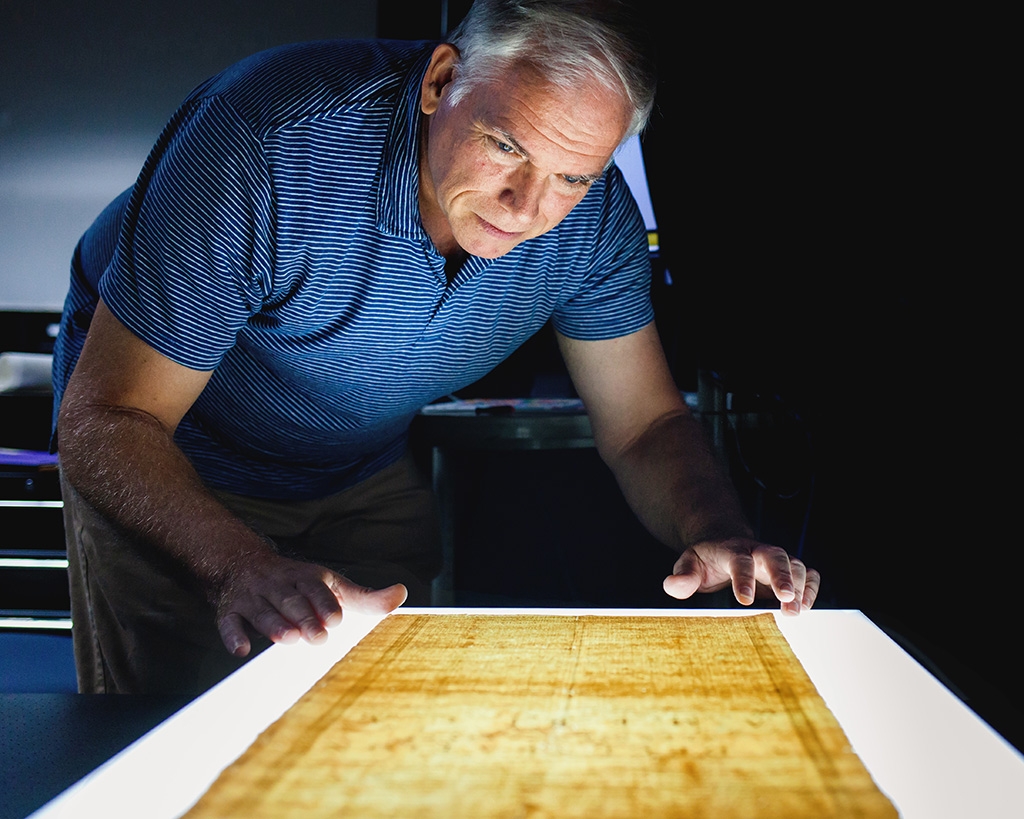
As part of a conservation center, NEDCC’s Imaging Services is dedicated first and foremost to the physical safety of the objects being digitized. Each item is carefully inspected in advance to determine the safest and most efficient digitization method, and handled with utmost care during the process itself. For items that present physical challenges, NEDCC’s photographers consult with its conservators to identify the best approach for the given condition of the item.
 Best Practices
NEDCC adheres strictly to the FADGI (Federal Agency Digitization Guidelines Initiative) standards for still-imaging of cultural heritage materials as relates to the environment, equipment, workflow, and deliverables. We employ imaging equipment that minimizes handling and light-exposure to avoid wear and the potential for damage. For example, we never use equipment that employs automated handling designed for mass production, such as sheet-fed scanners or automated page-turning. We also choose our equipment so that we can capture the highest quality digital surrogates possible—files that will render the smallest meaningful detail while reproducing color and tonality with exceptional accuracy.
Conservation & Imaging
Optimum image capture often takes place during conservation treatment, and NEDCC's book and paper conservation labs work closely with the Center's imaging studios. Because of this unique collaboration, NEDCC's conservators are able to consult with photographers to determine the best approach for imaging an object and advise on careful handling of rare and fragile materials. This further protects the material, improves efficiency, and captures information at the safest and most appropriate time, while conservation treatment ensures long-term preservation of the original object.
Flexibility
NEDCC’s Imaging Services tailors its workflows and deliverables to meet each project’s and client’s specific needs. Projects that are complex or logistically challenging, that have specific and demanding requirements, or that involve unusual or difficult-to-image items are individually considered, the options and possibilities are discussed with the client, and a process is developed to achieve the required results.
IMAGING SERVICES
 Digitization
Our core service is the digital reformatting of cultural heritage materials, with projects typically ranging in size from a single letter to a collection of 50,000 negatives. We digitize materials at preservation-master quality to capture all visual information for the long-term, and then create derivative files to facilitate access and reduce handling of the original. And, we’ve designed a number of customized workstations to safely digitize some of the most difficult-to-capture formats, from glass plates to wall maps.
Rehousing
NEDCC has introduced preservation-oriented rehousing as a service available alongside digitization, recognizing that digitizing an object is the perfect opportunity and excuse to move it into a better envelope, folder, or sleeve.
Whether the project is 30 photographs or 30,000 photographs, NEDCC’s Imaging Services department collaborates with its conservators to develop rehousing methodologies for almost any digitization project and almost any type of object, from 35mm negatives to 3’ x 4’ blueprints, with the long-term preservation of the objects as our main objective. We work with you to understand your storage environment, the collection’s existing housing conditions and its anticipated use after digitization, and draft proposals detailing the specific methods and materials we recommend for your collection.
Collection Assessments for Digitization
To complement clients’ efforts to prioritize their digitization projects based on scholarly content, we offer collection assessments to help them evaluate physical condition and associated risks of handling by the public. Combining curatorial priorities with condition-related priorities produces an optimal, long-term, programmatic digitization strategy.
Training and Workshops
In collaboration with NEDCC’s Preservation Services department, Imaging Services provides digitization-related instruction and hands-on training. These range from webinars on digitizing personal collections to one-on-one instruction on implementing best practices for an institution’s own digitization efforts.
For information on working with NEDCC on a digitization project
See Working with Imaging Services
For information on shipping
Packing and shipping instructions are available here.
For information on NEDCC's Courier Services
NEDCC offers courier services on a negotiated basis for clients in the northeast corridor of the US. Learn More about NEDCC’s Courier Services.
ASSESSMENTS
NEDCC offers different types of assessments to evaluate collections. Assessment reports can be used to support fundraising efforts and grant applications.
- Preservation Assessments (including Pre-Assessments and Community-Based Assessments)
- Digital Preservation Assessments
- Collection-Level and Item-Level Assessments (including paper-based, bound, photographic and film-based materials, and audio collections.)
A number of funding agencies make grants available for conservation and preservation activities. NEDCC can help plan and carry out these grant-funded activities and can offer advice on planning proposals.
LEARN MORE about our staff
Read about the experience and qualifications of the NEDCC Imaging Services Staff.
Follow NEDCC Stories
Stories about some of NEDCC's most interesting conservation, digitization, audio preservation, and other preservation projects. Read in-depth descriptions of the processes and view detailed photo galleries of collections from cultural institutions, large and small, across the nation. NEDCC Stories
QUESTIONS?
Need advice? Interested in beginning a conversation about a digitization project?
Contact:
Terrance D'Ambrosio
Director of Imaging Services
978-470-1010, ext. 214